
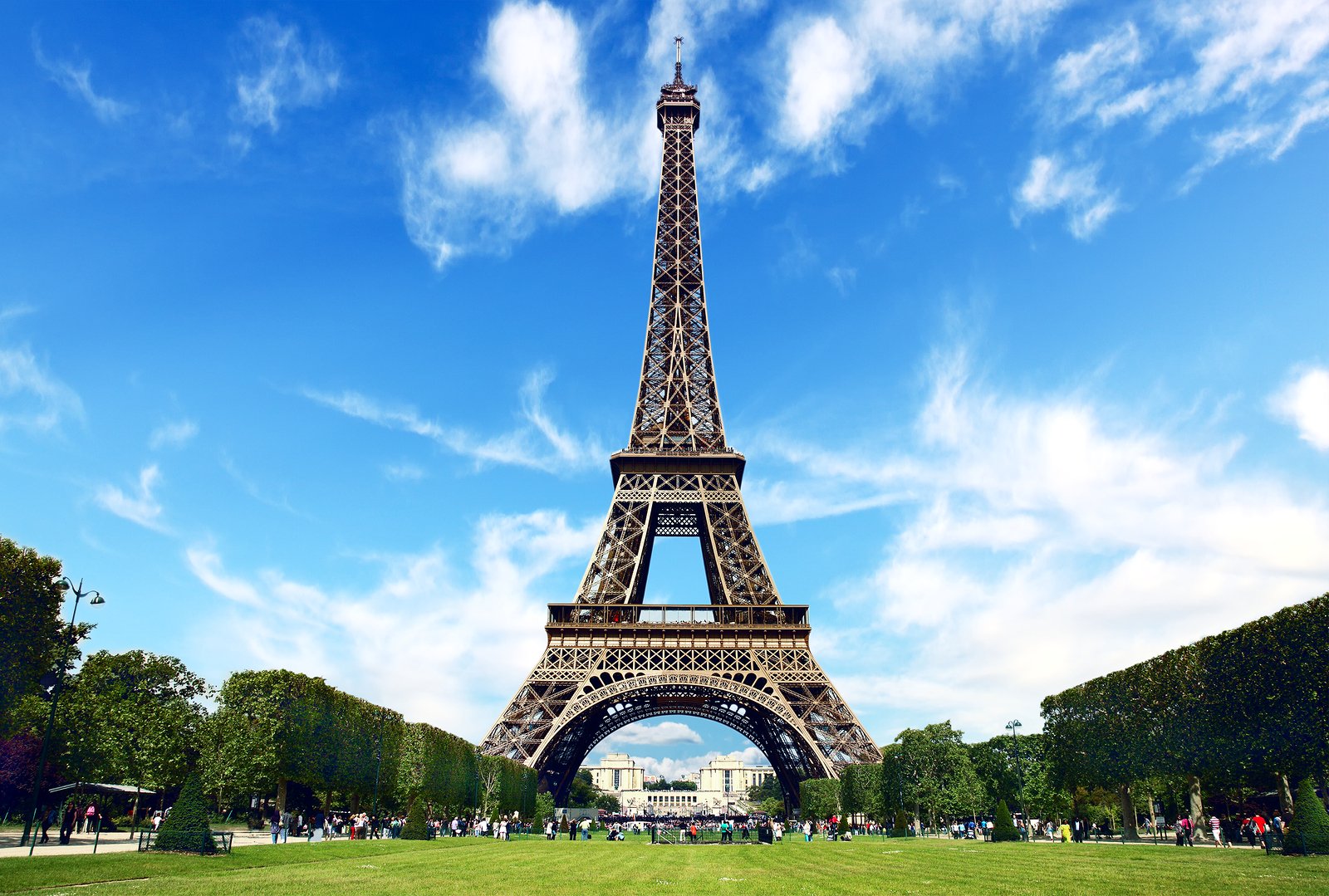
The Eiffel tower is one of the most iconic buildings in the world, it is a symbol of Paris, France and the French Revolution. The monument stands at 300 metres tall (excluding antennas) and held the record for the world’s tallest man made building for 41 years. It finally lost its title to the construction of the Chrysler building in 1930.
The concept design for the 300 metre tall Eiffel Tower, came from two of Gustave Eiffel’s chief engineers in 1884. The aim was to construct the Eiffel Tower for the 100th anniversary of the French Revolution.
The original concept design was for the structure to be built like a large pylon, this is because Eiffel’s engineering company had a wealth of experience and mastered the building of bridge supports. This is the reason for the design of the Eiffel Tower, however it wasn’t originally aesthetically appealing. The lead engineers realised that this could cause a negative public opinion, so therefore commissioned the architect Stephen Sauvestre to work on the projects appearance.
There were several suggestions which Sauvestre suggested in order to change the appearance of the tower. Sauvestre proposed stonework pedestals to dress the legs, monumental arches to link the columns and the first level, large glass-walled halls on each level, a bulb-shaped design for the top and various other ornamental features to decorate the whole of the structure. A lot of the proposals were rejected to simplify the project but some major elements were kept to give the Eiffel Tower it’s characteristic appearance.
The construction of the of the Eiffel Tower began on the 1st July 1887 and was finally completed 22 months later, on the 31st March 1889.
Each of the 18,000 pieces used to construct the Tower were specifically designed and calculated, traced out to an accuracy of a tenth of a millimetre and then put together forming new pieces around five metres each. All the metal pieces of the tower are held together by rivets, a well-refined method of construction at the time the Tower was constructed.
First the pieces were assembled in the factory using bolts, later to be replaced one by one with thermally assembled rivets, which contracted during cooling thus ensuring a very tight fit. A team of four men was needed for each rivet assembled: one to heat it up, another to hold it in place, a third to shape the head and a fourth to beat it with a sledgehammer. Only a third of the 2,500,000 rivets used in the construction of the Tower were inserted directly on site.
Considering the rudimentary means available at that period, this could be considered record speed for such a feat. The assembly of the Tower was a marvel of precision as all chroniclers of the period.
Have you visited the Eiffel Tower? What do you think of its construction?
Let Fairport know in your comments below.

